Home / Work / Digital Product + Experience Design / Hertz
Hertz
Engineering a Unified Global Mobility Platform
OVERVIEW:
The Responsive Evolution of the Hertz, Dollar, and Thrifty Ecosystem
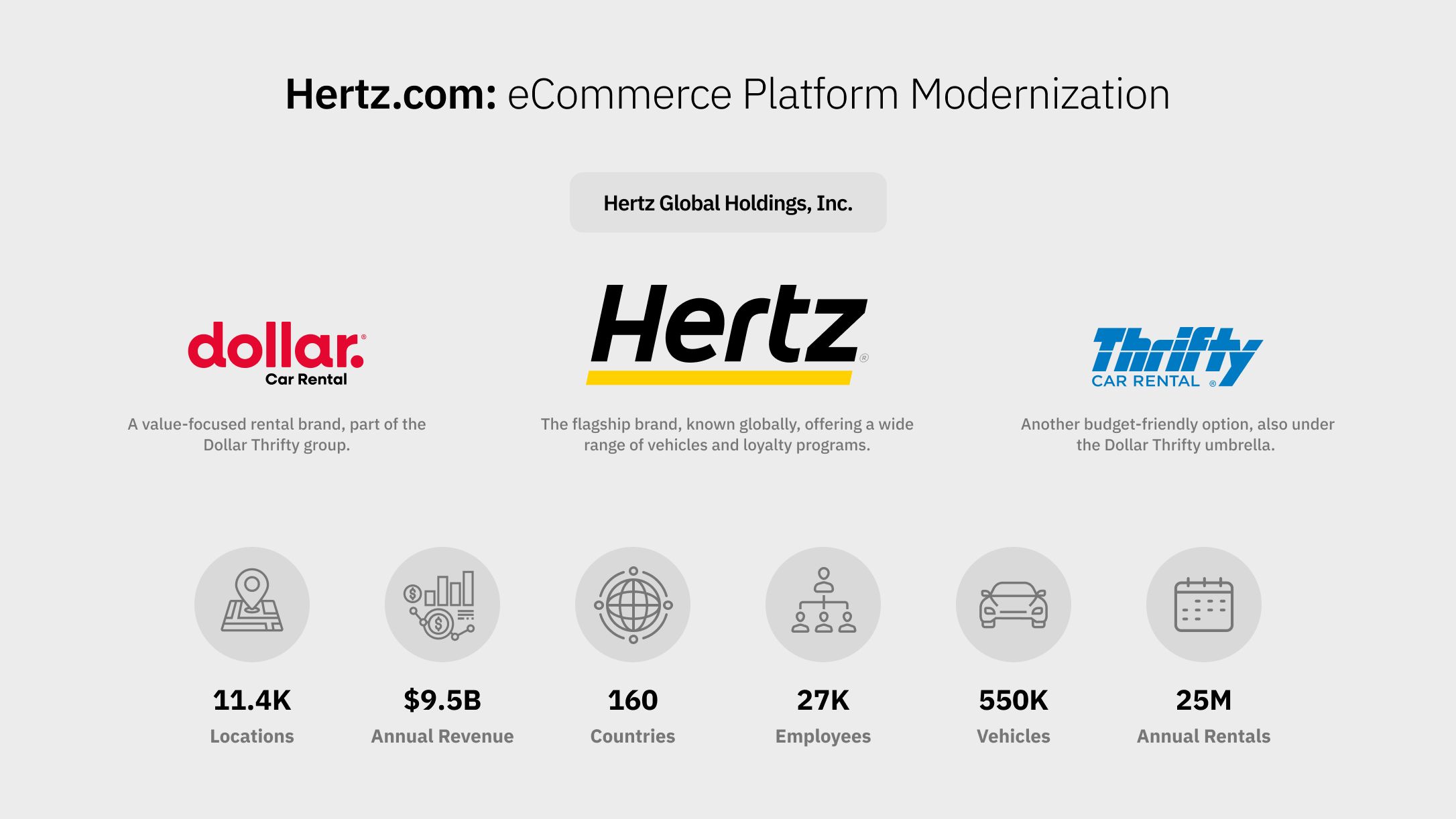
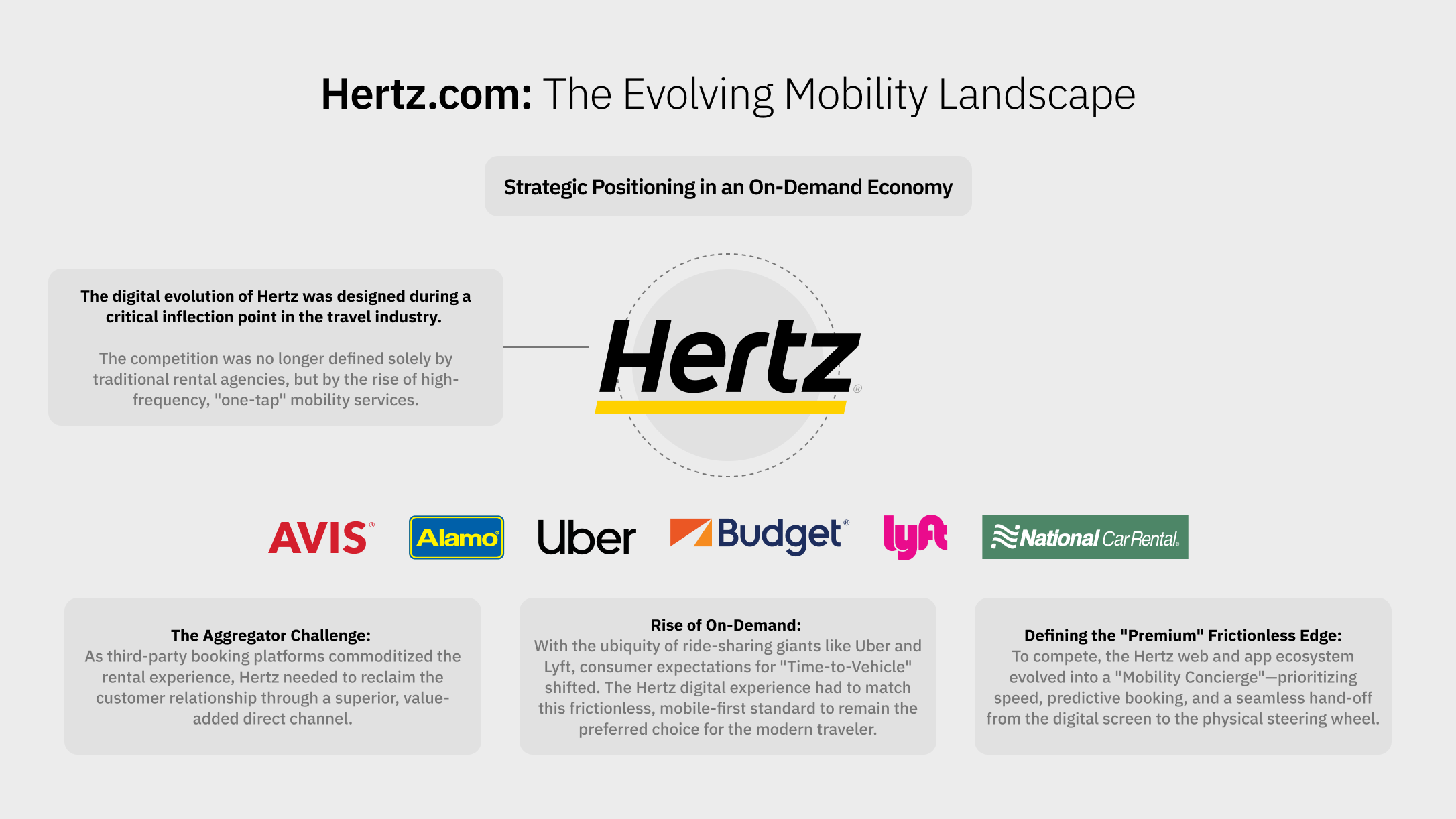
Hertz is a global pioneer in the car rental industry, operating for well over a century with one of the most recognizable brands in the world. Facing fierce disruption from on-demand giants like Uber and Lyft, and a hyper-competitive rental market, Hertz engaged IBM iX for a massive digital overhaul.
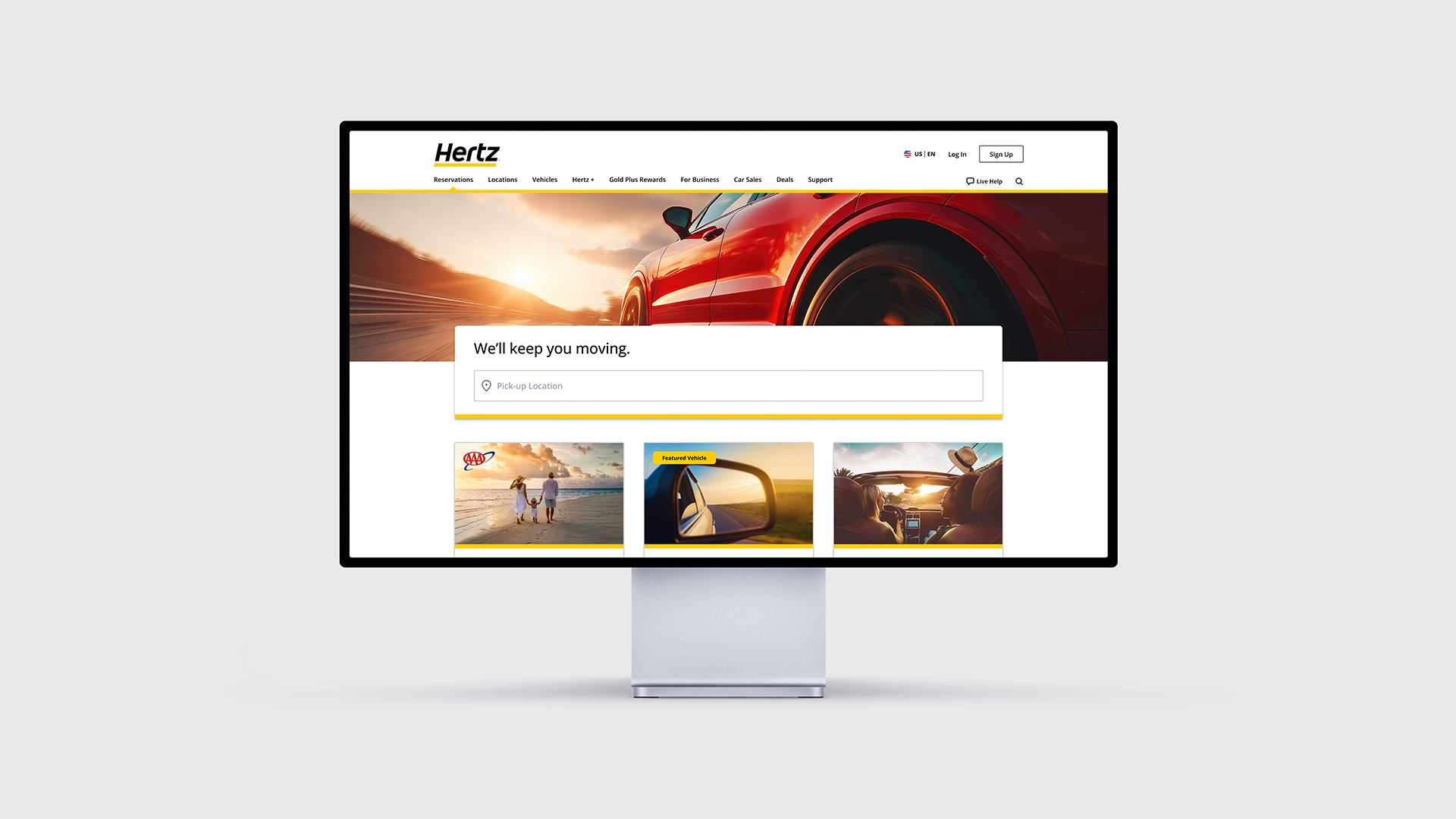
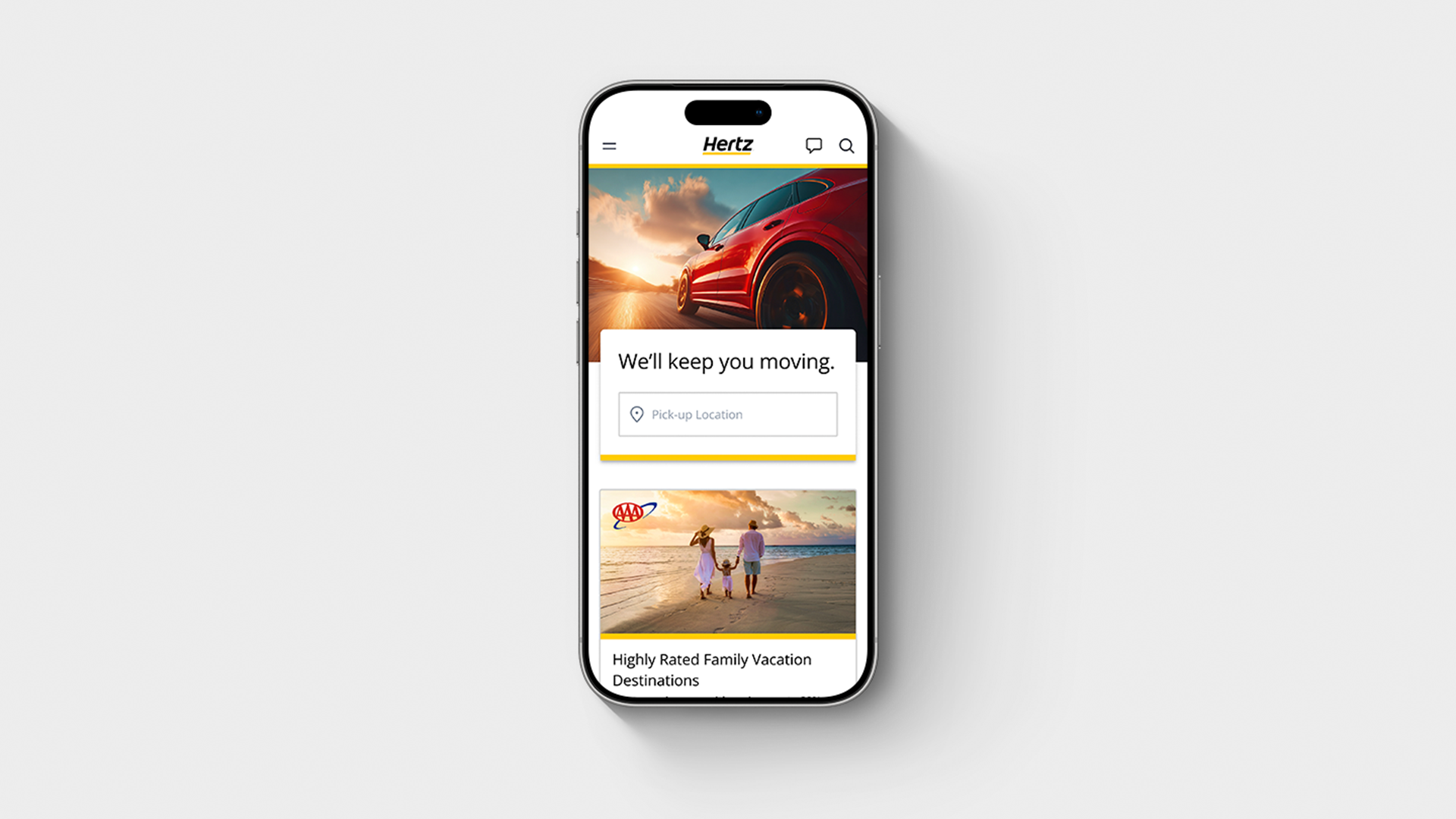
The mission was to modernize an aging, fragmented infrastructure into a high-performance, responsive e-commerce platform that unified the Hertz, Dollar, and Thrifty brands into a singular, high-velocity digital ecosystem. Redefining travel velocity.

ROLES:
Senior Art Direction
Lead UX/UI Design
Design System Architecture (Common Core Library)
Omni-Channel Strategy (Web, iOS, Android)
TOOLS & RESOURCES:









INSIGHT:
The Fragmented IT Barrier
At the program’s inception, Hertz was burdened by a massive, disconnected IT landscape: 1,800 disparate systems, 30 different processing platforms, and 6 separate database vendors.
This complexity meant that launching a single product required manual changes across 18 different systems. The digital experience was flawed, lacking mobile-first thinking and a common core, which led to a "Decision Bottleneck" for travelers who demanded the same "one-tap" ease of use found in ride-sharing apps.





STRATEGY:
The "Common Core" Architecture
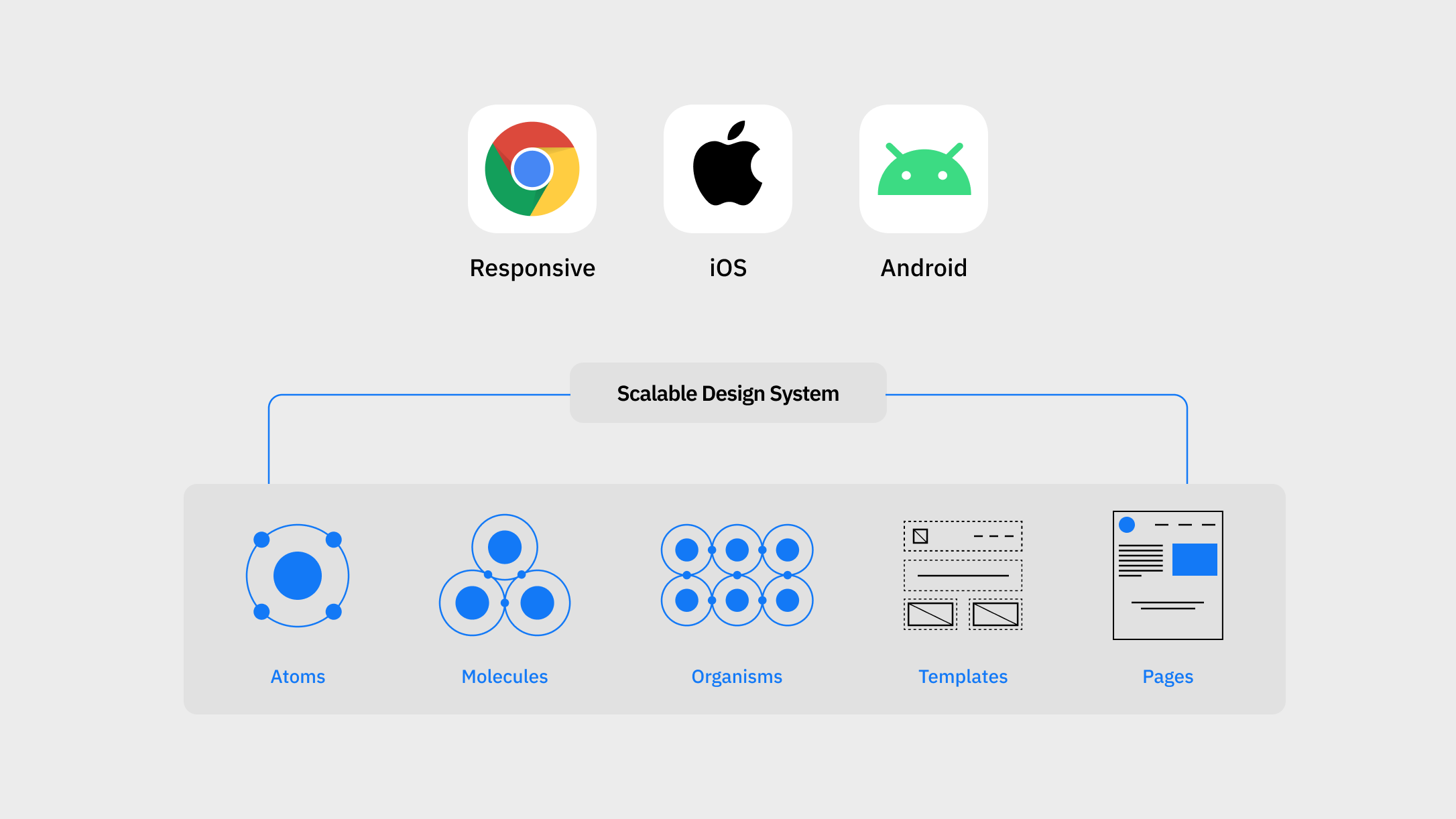
We moved away from bespoke site builds toward a Common Core Library (CCL)—a fundamental design principle that allowed for shared information and structures across all brands.
Unified Framework:
We leveraged Angular for the front-end presentation layer and Adobe Experience Manager (AEM) to manage content, ensuring a consistent, high-performance experience across all device formats.
Responsive Multi-Tenancy:
We engineered the platform as a flexible framework that could be "skinned" for Dollar and Thrifty using the same robust codebase, dramatically increasing time-to-market for multi-brand updates.
Streamlined Reservation Flow:
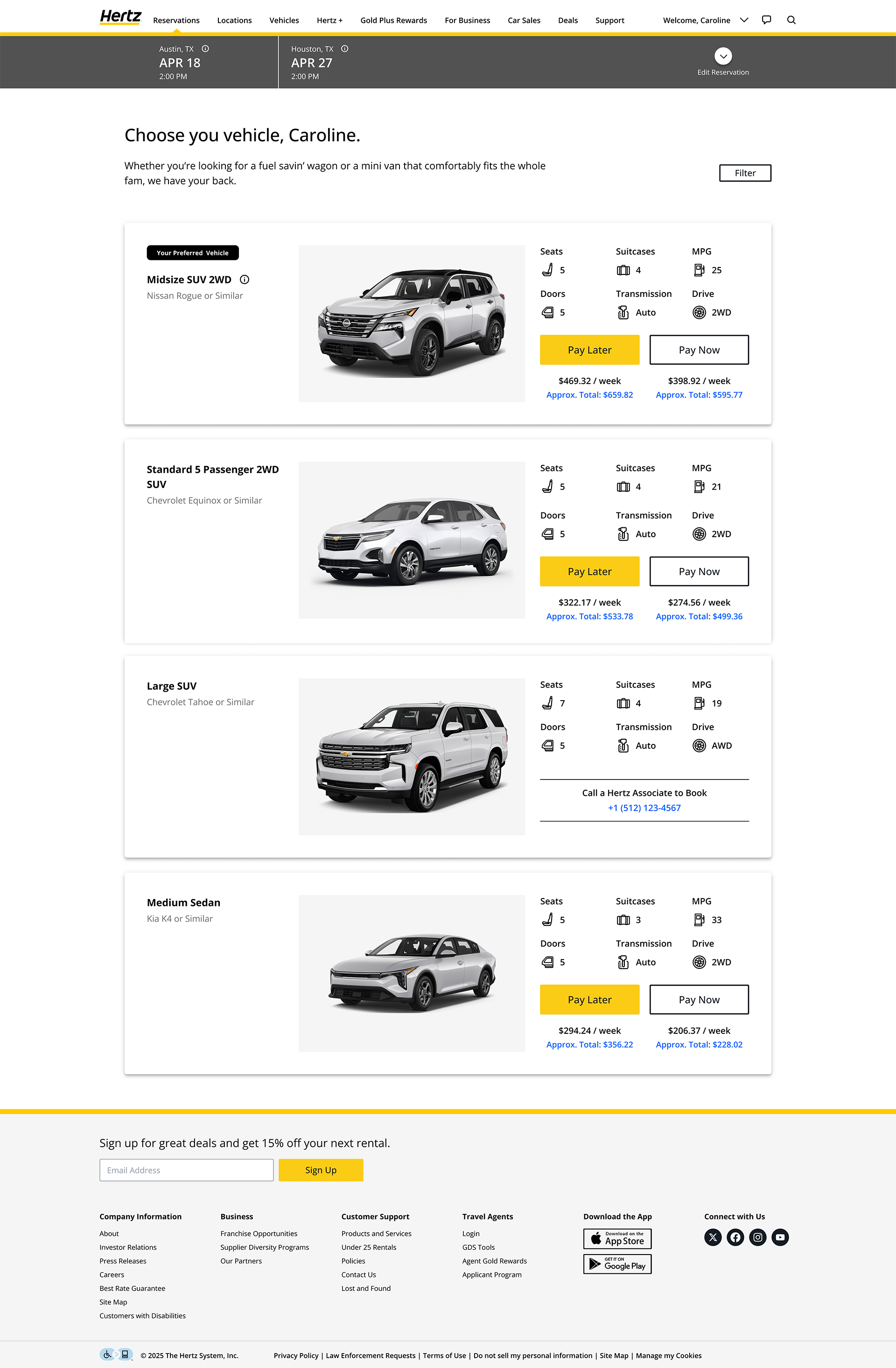
I led the redesign of the reservation funnel, transforming it from a complex legacy process into a modern, mobile-first journey optimized for both leisure and business travelers.
The "Precision" Visual System:
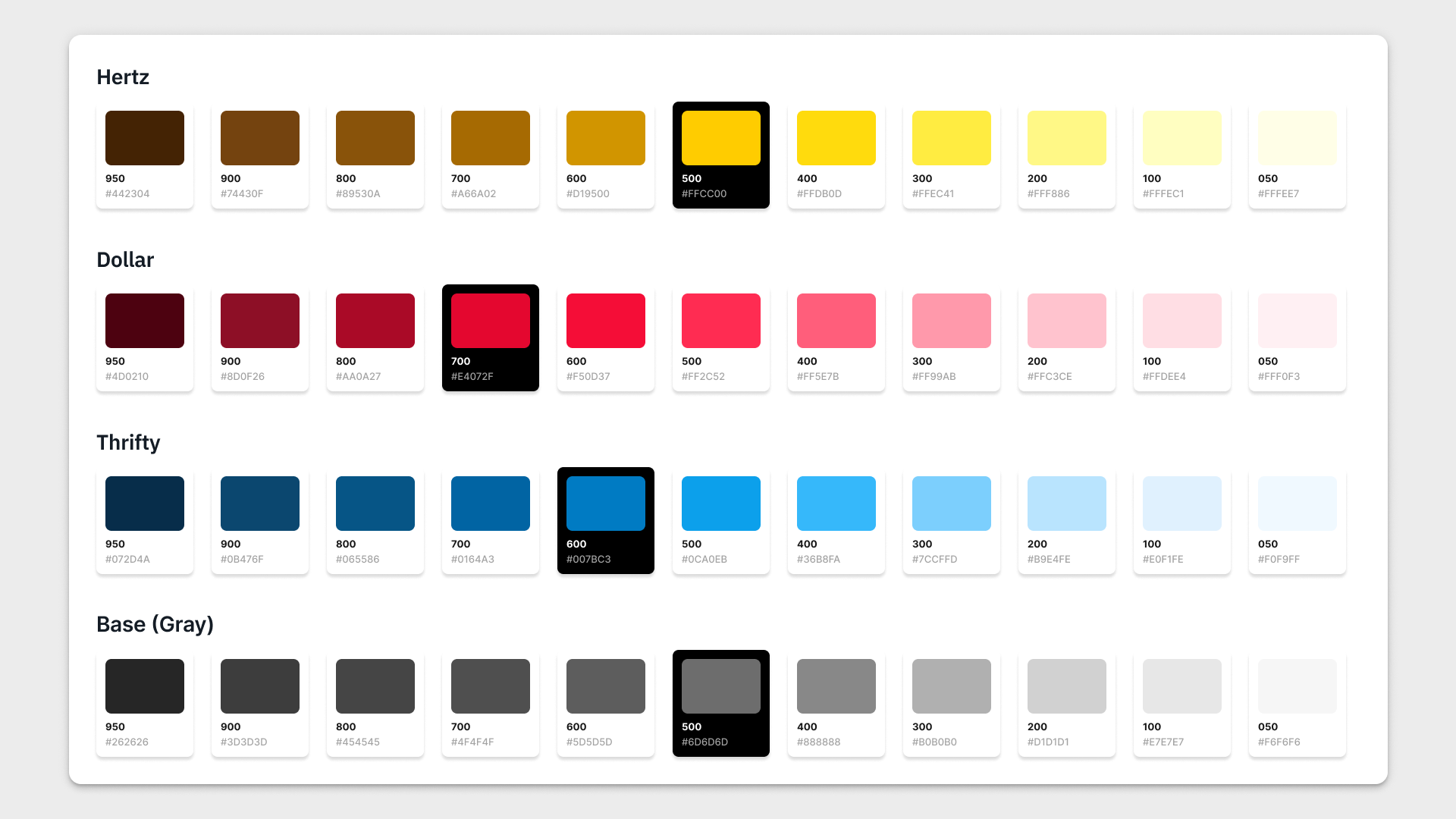
Leveraging the iconic Hertz Yellow alongside specialized palettes for Dollar and Thrifty, we established a clear visual hierarchy that prioritized speed and reliability.





OBJECTIVE:
Revitalizing the Market Leader
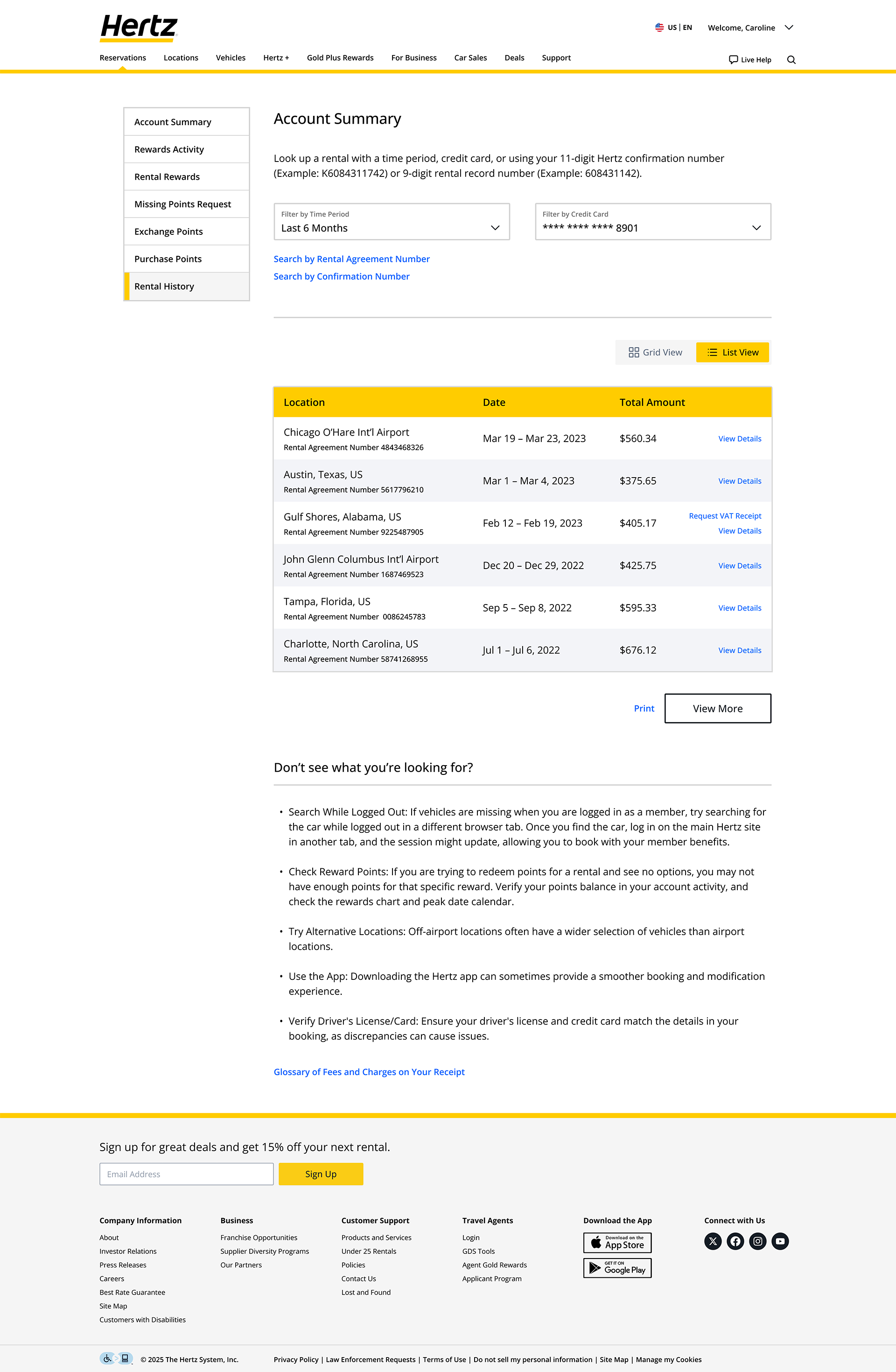
The goal was to deliver a seamless, contemporary digital interface that simplified the customer journey, eliminated technical debt, removing bloated code, and provided a future-proof foundation for Hertz to remain the dominant force in global mobility.



PROCESS + WORKFLOW:
The Agile Digital Engine
Iterative Squad Model:
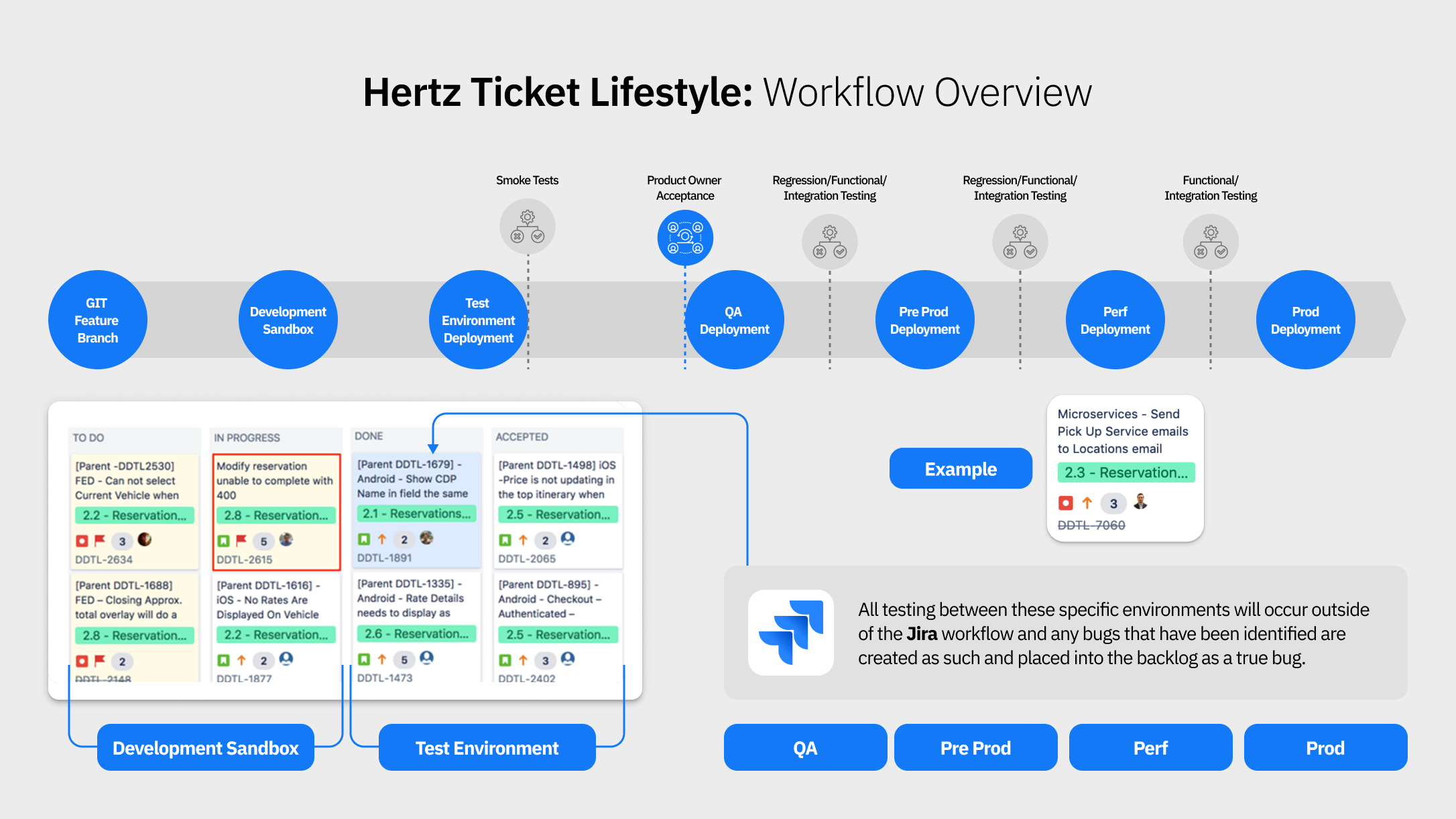
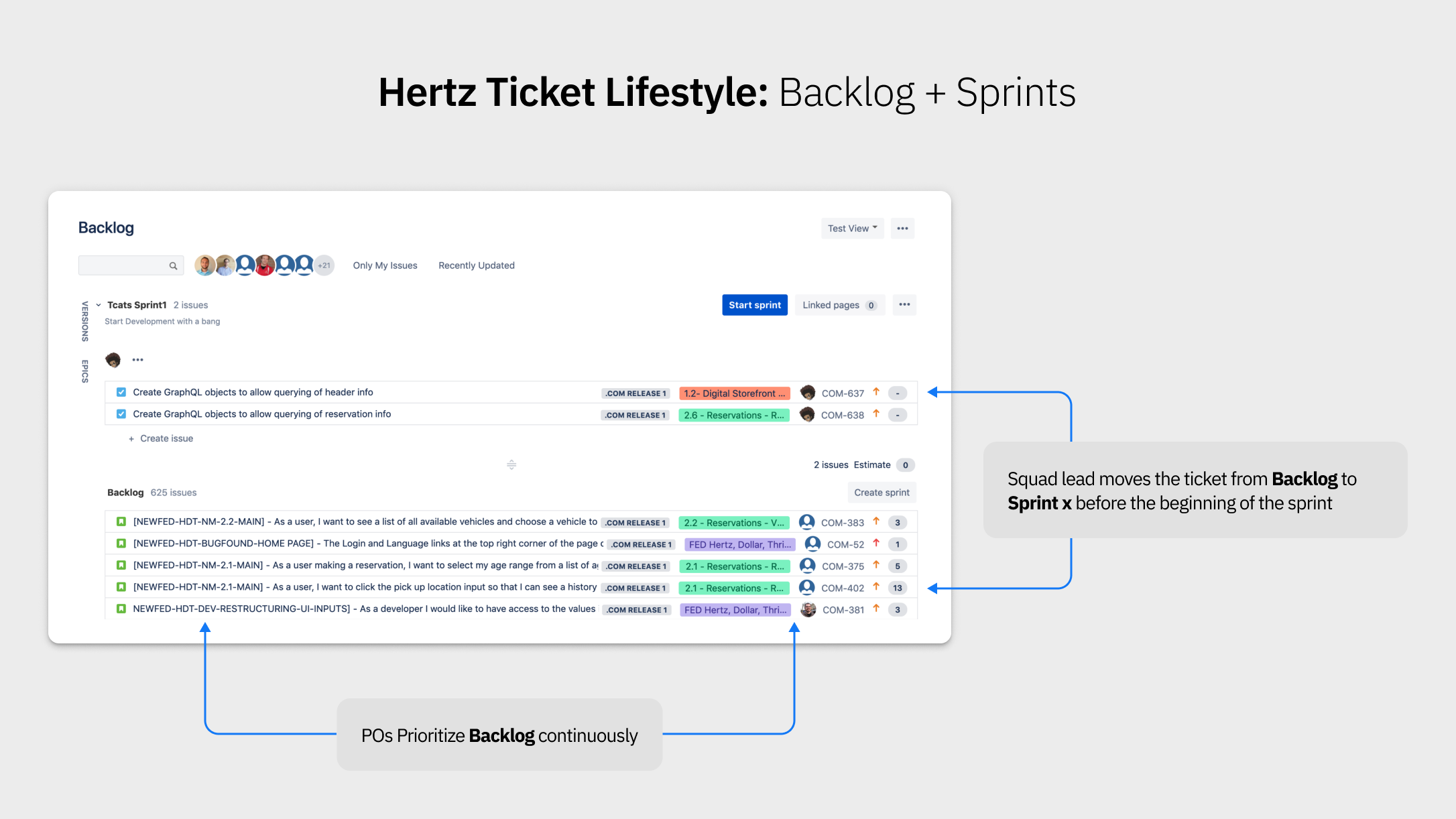
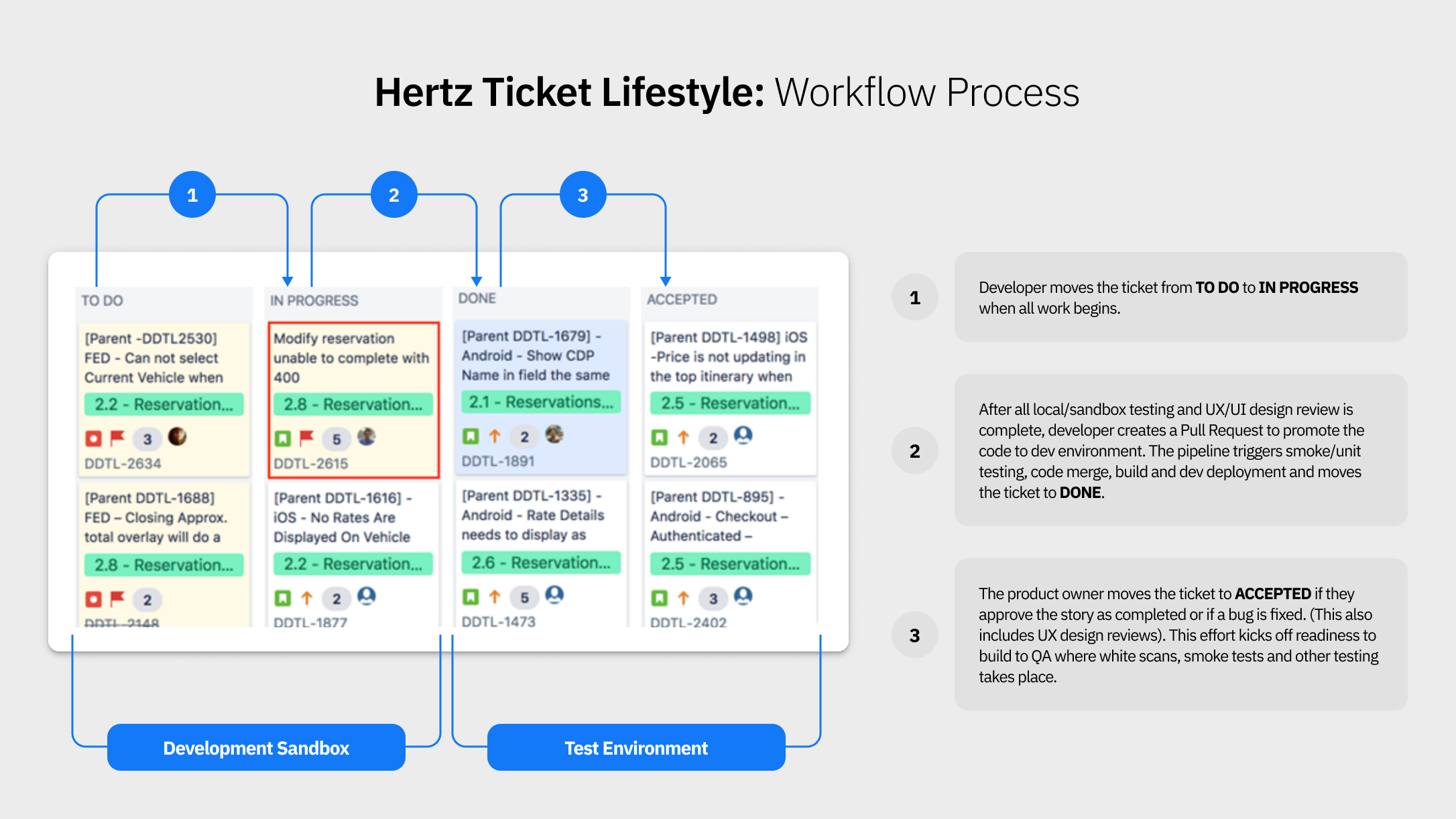
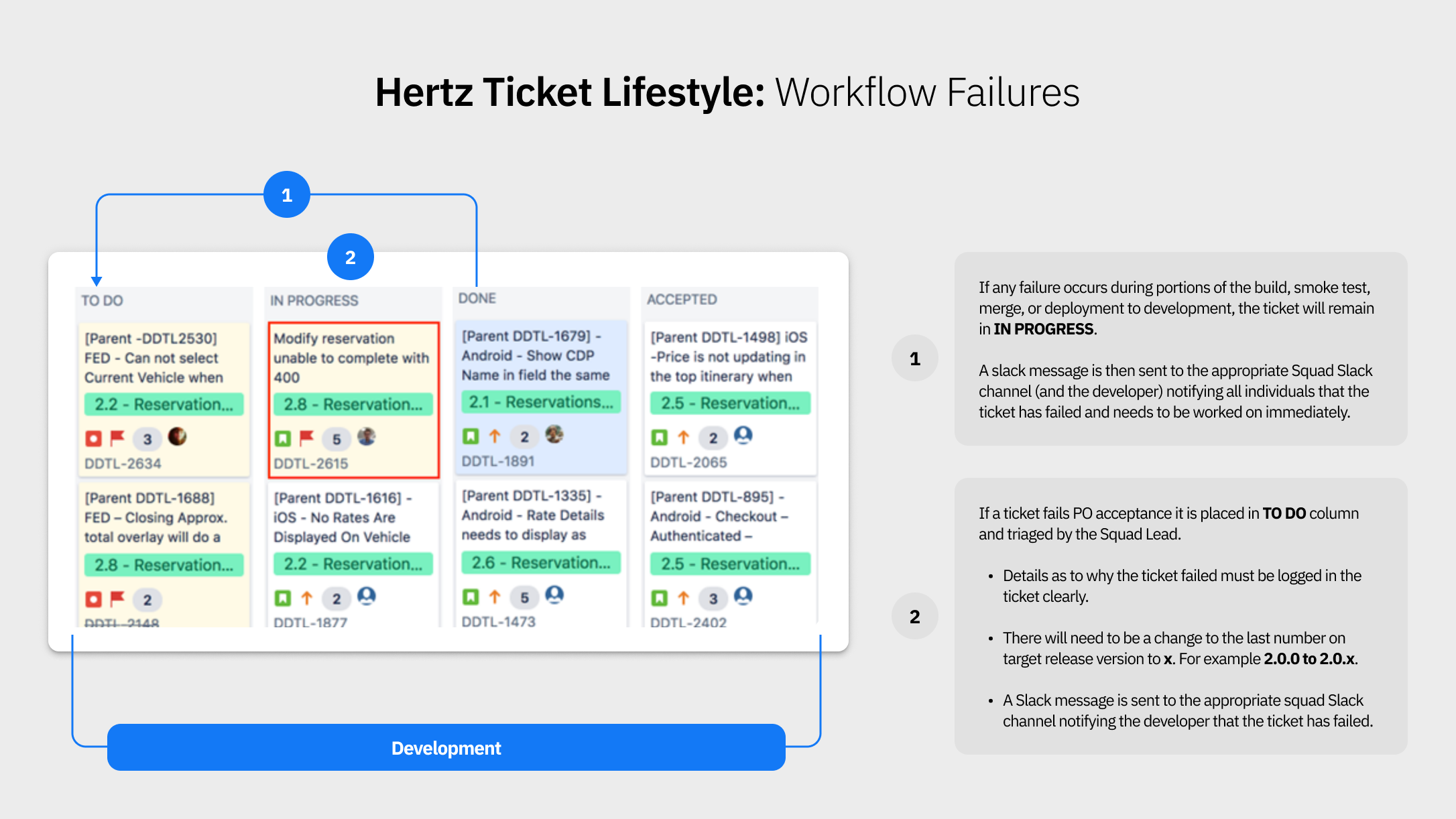
We operated in a rigorous Agile methodology, working daily with Product Owners (POs) to prioritize the backlog and deliver working code through constant sprint cycles.
Design/Development Synergy:
The IBM iX design team led weekly "Design/UX Touch Bases" to resolve complex architectural issues in real-time, ensuring that the Angular and AEM implementations stayed 100% faithful to the high-fidelity vision.
Continuous Visual QA:
To prevent the "commented-out code" failures of previous vendors, we performed exhaustive Visual QA on all screens within each sprint, ensuring every responsive breakpoint met our "Gold Standard" before PO acceptance.
AEM Component Architecture:
We architected AEM components to identify high-reuse requirements, minimizing repeated code and ensuring that the Common Core Library lived up to its name as the "Single Source of Truth."


RESULTS:
Institutional Turnaround
Strategic Unification:
The successful development of the Common Core Library (CCL) enabled Hertz to manage 1,100+ unique web and app instances with a unified design language, significantly reducing maintenance overhead.
Global Accessibility:
By incorporating true responsive design, the platform became accessible to millions of travelers on any device—phone, tablet, or desktop—regaining the ground lost during previous failed implementations.
Operational Stability:
The transition to a unified, cloud-based infrastructure (Digital Experience, CRM, and Reservations) allowed Hertz to move with the agility of a tech-native company.
User Engagement:
The evolved reservation flow directly addressed user pain points, facilitating a more efficient path to booking for the 15 million+ Gold Plus Rewards members worldwide.
#1 in Customer Satisfaction:
Following the rollout of the new digital experience at the start of the calendar year, Hertz was ranked No. 1 in Customer Satisfaction for Rental Cars by J.D. Power for the second year in a row.
Operational Efficiency:
The transition to the "Common Core" architecture helped the company deliver annualized cost savings of approximately $3 billion by consolidating legacy locations and streamlining IT operations.
Digital Resilience:
Despite a 48% drop in total revenues due to global travel halts in (leading up to the lengthy pandemic time period), the new digital platform allowed Hertz to pivot, with off-airport (local) revenues increasing to 45% of total revenue—proving the flexibility of the local-search and booking engine.
Rapid Recovery:
Late in the year of the initial rollout, global revenue had nearly doubled from lows reported in April of that year, driven by the streamlined mobile-first booking experience that captured the rebound in domestic travel.