Home / Work / Digital Product + Experience Design / WorldCat Discovery
WorldCat Discovery
Redesigning the Global Gateway to Knowledge
OVERVIEW:
Transforming a Legacy Giant into a Modern Research Powerhouse
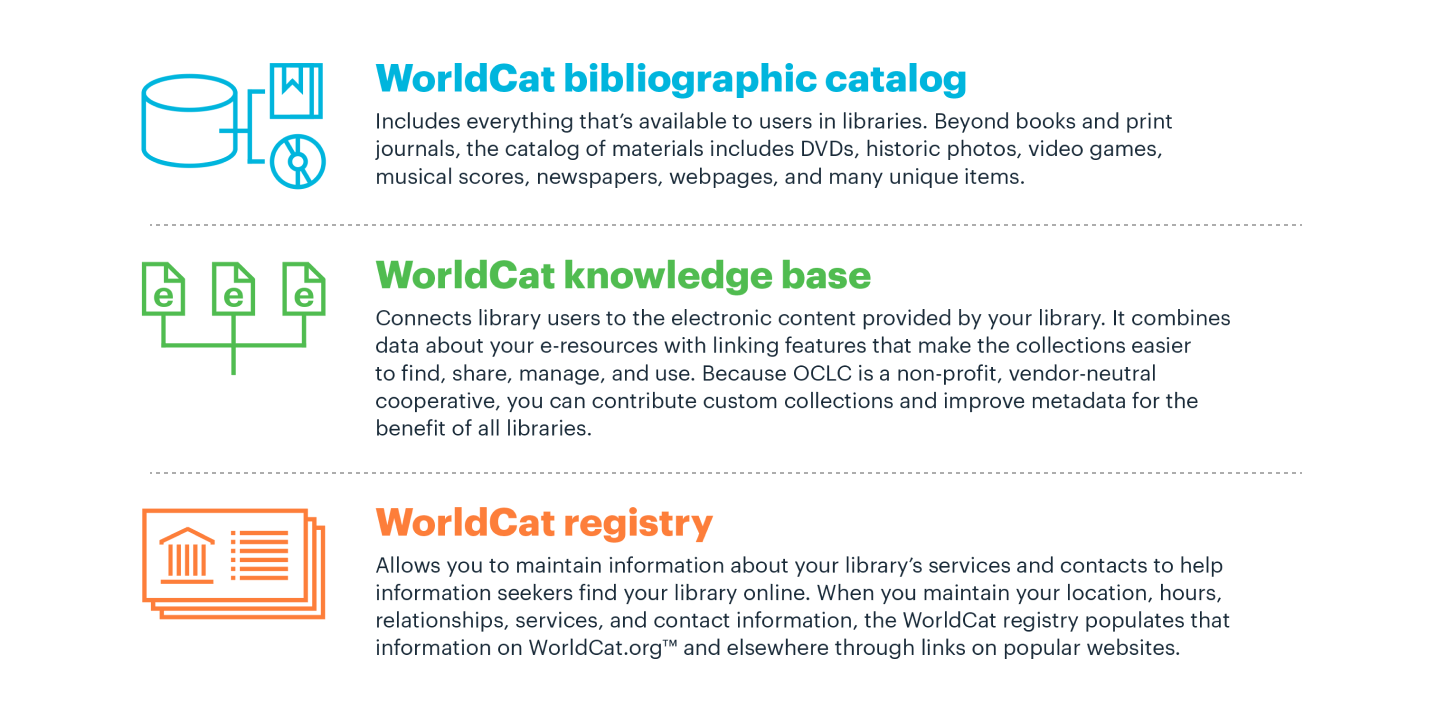
OCLC is a global non-profit cooperative providing technology services to over 10,000 libraries. Its flagship product, WorldCat Discovery, is a cloud-based Web-Scale Discovery (WSD) service that allows millions of researchers to search the library’s physical holdings alongside billions of licensed electronic resources. This is knowledge shared at scale.
Tasked with modernizing this massive bibliographic engine, the mission was to replace a fragmented, dated infrastructure with a unified, modern, Google-like search experience that honors OCLC’s rallying cry: “What is known must be shared.”

ROLES:
Lead Product Designer
Information Architecture (IA)
Design System Contributor
Accessibility & Responsive Strategy
TOOLS & RESOURCES:



INSIGHT:
The Research Friction Gap
While WorldCat is the undisputed leader in global library holdings (the "Union Catalog"), the legacy experience suffered from technical debt and "Information Fatigue."
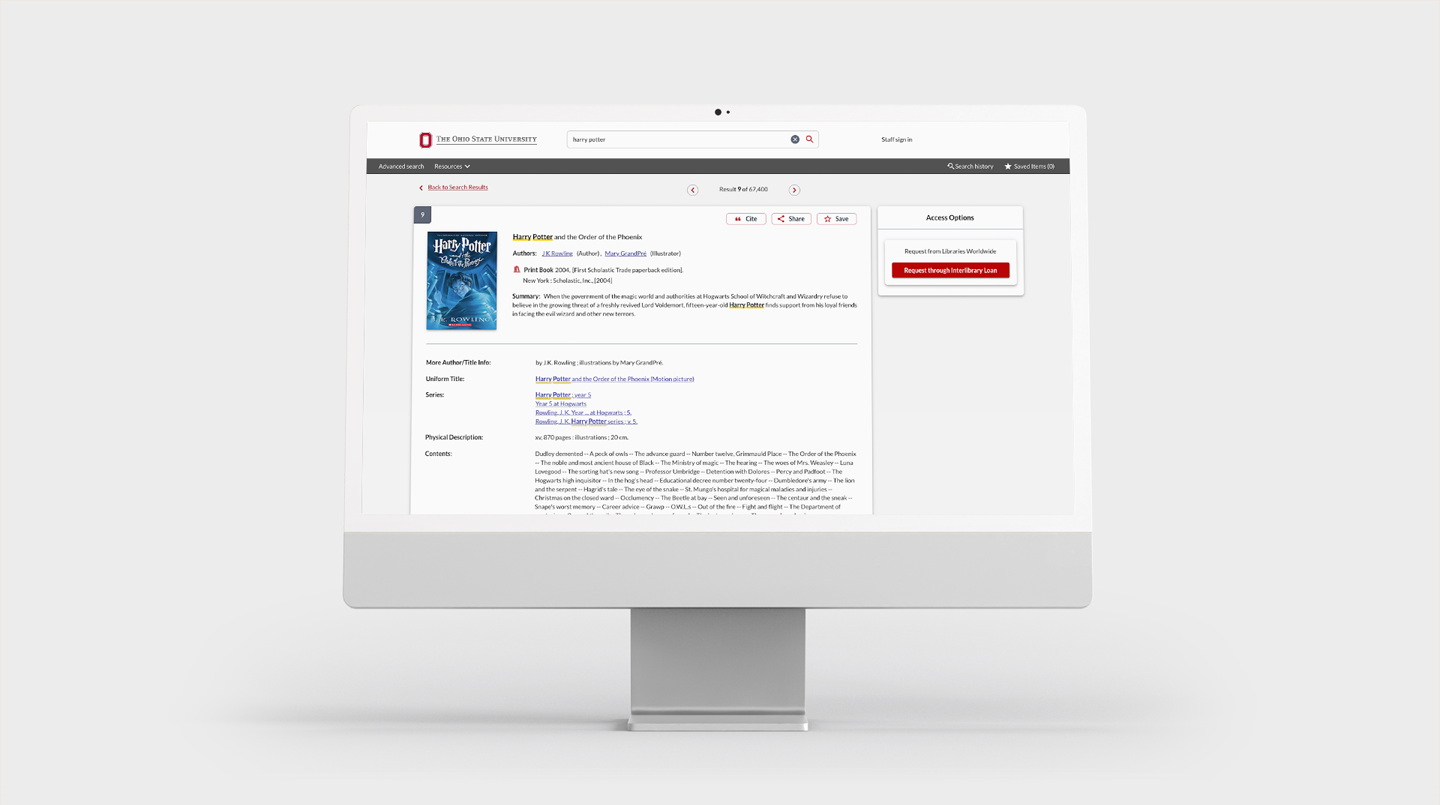
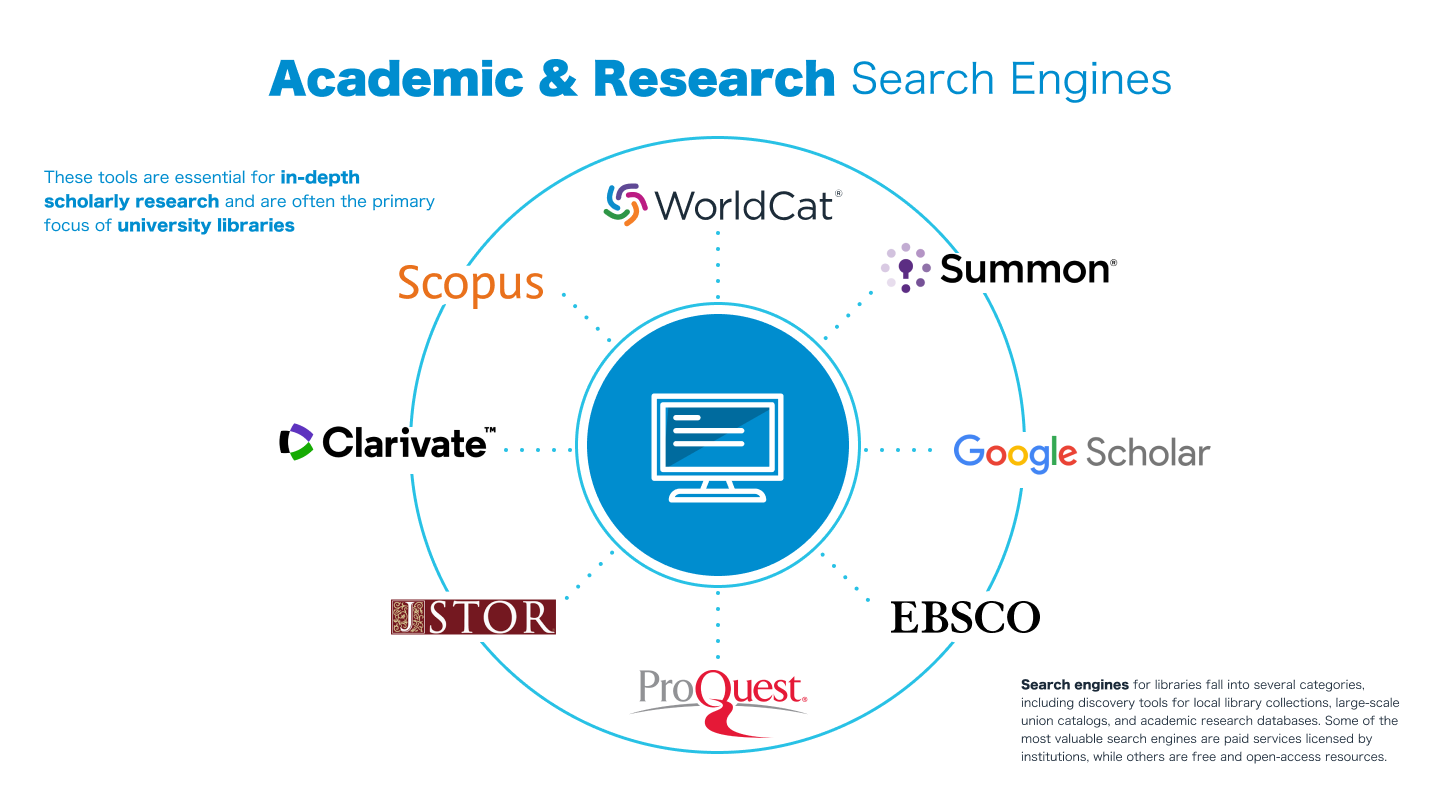
Users faced a cluttered interface, inconsistent mobile performance, and a cumbersome "last mile"—the journey from finding a search result to accessing the actual full-text content. To remain competitive against rivals like EBSCO and Clarivate, WorldCat needed to evolve from a technical database into an intuitive, human-centered discovery tool.






STRATEGY:
Building the Ship While Sailing It
The WorldCat Discovery strategy focused on a rapid evolution of both technology and aesthetics.
The Cardigan Connection:
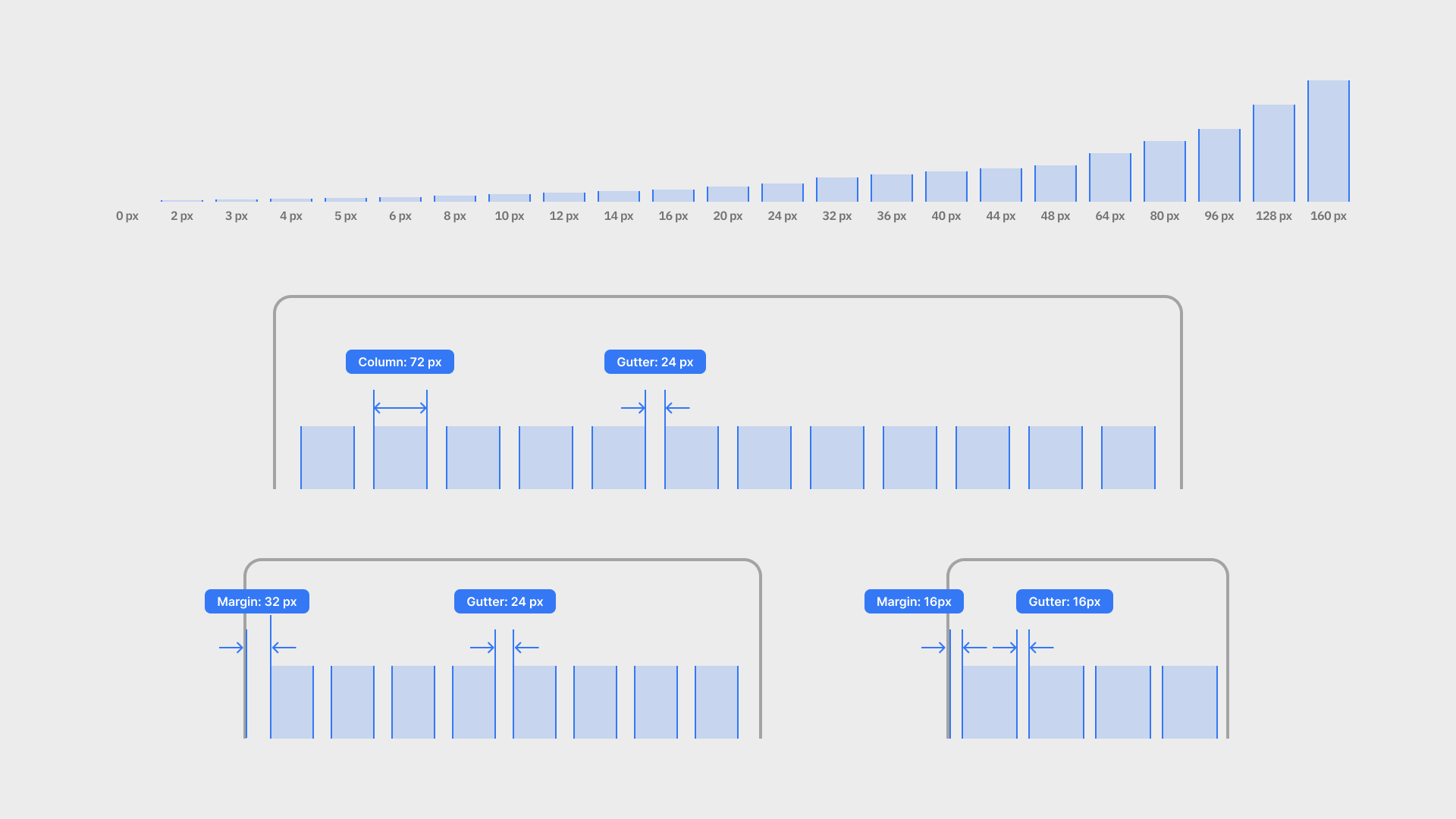
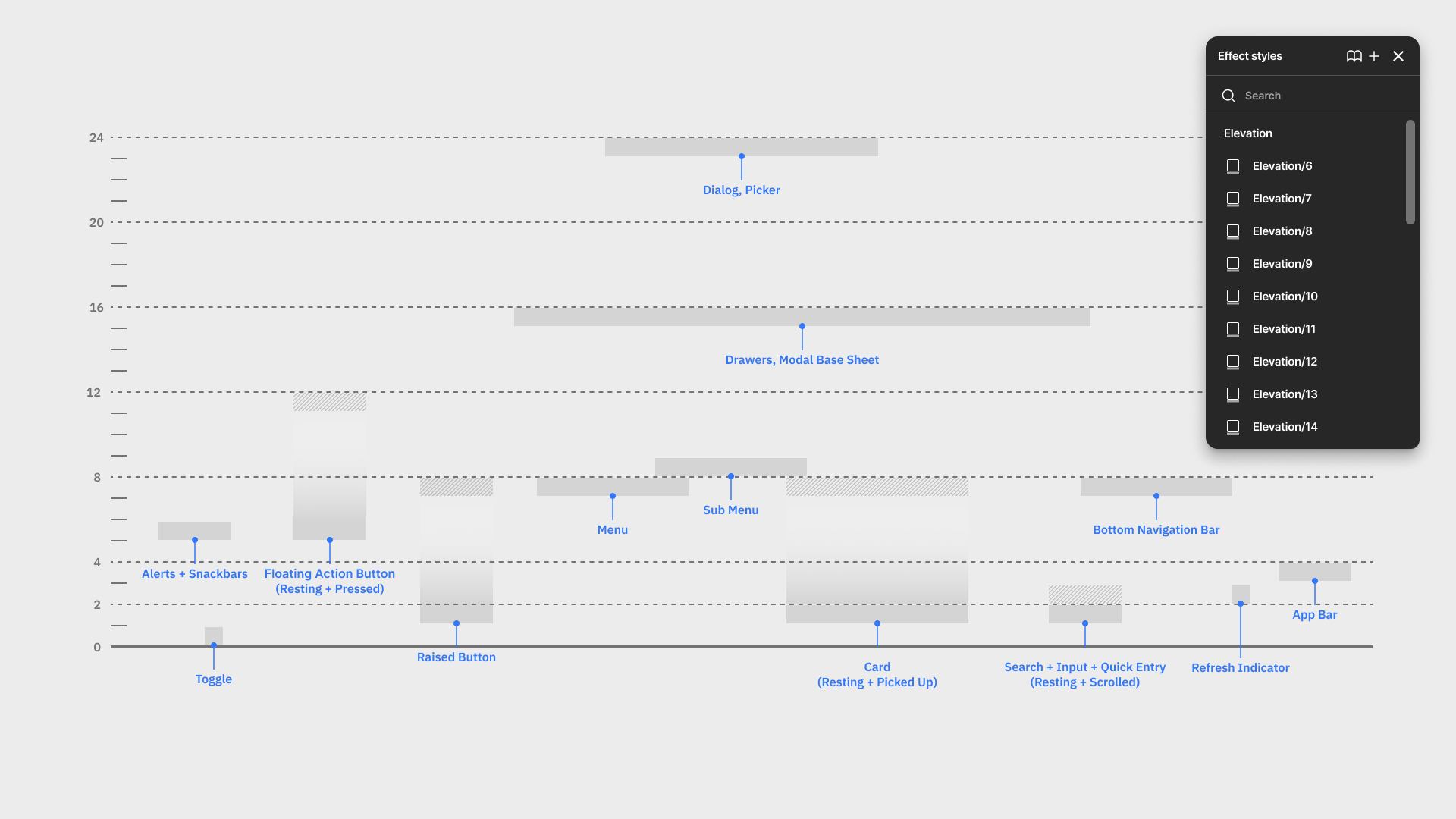
This project served as the primary pilot for Cardigan (internally known as GROWTH), OCLC’s modernized design system. We leveraged WorldCat’s complex data requirements to pressure-test and refine the system’s components, ensuring they could handle massive metadata density.
Radical Simplification:
We implemented a "Search-First" philosophy, prioritizing whitespace and high-legibility typography to reduce cognitive load during complex academic research.
Responsive Modernization:
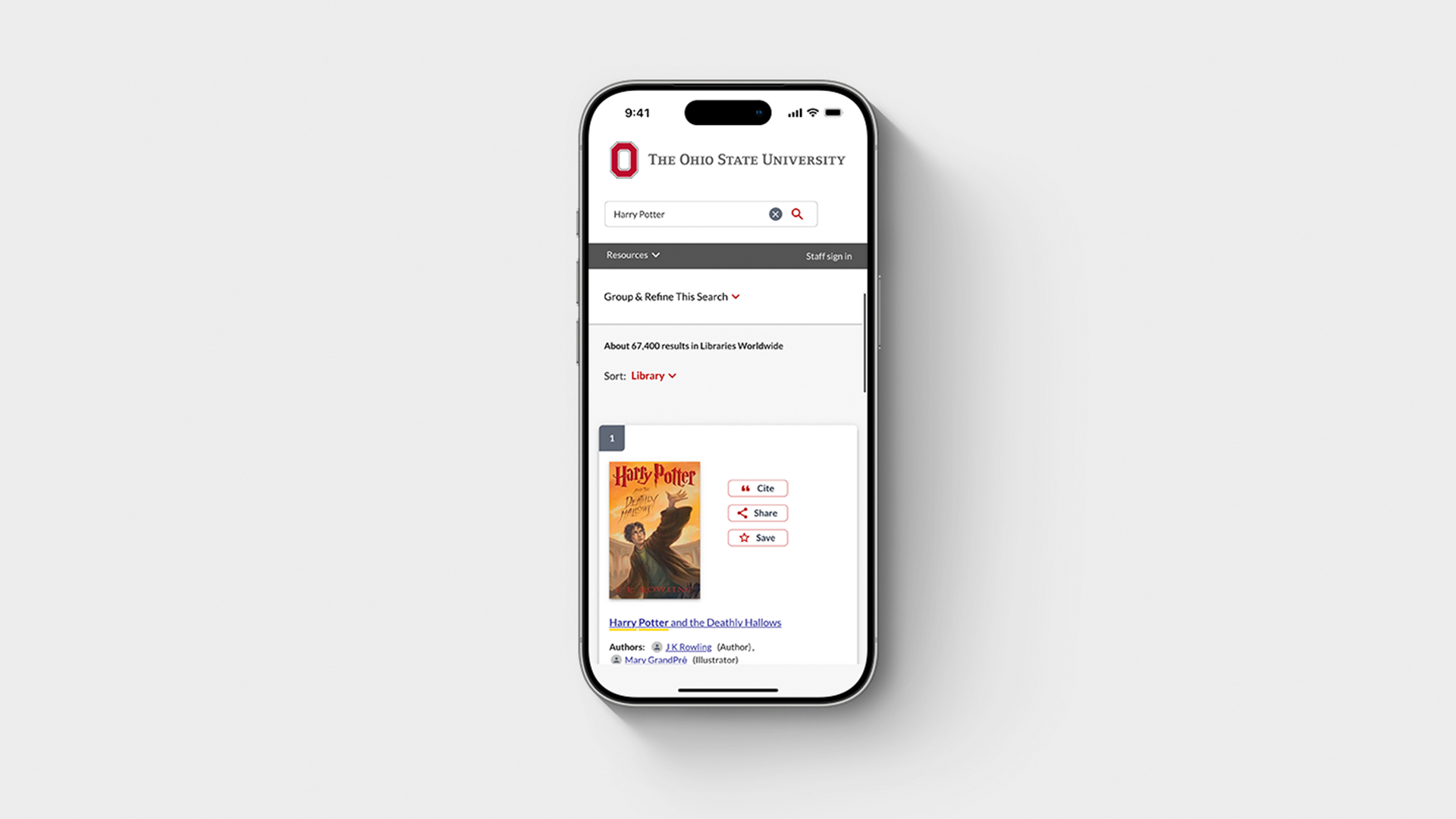
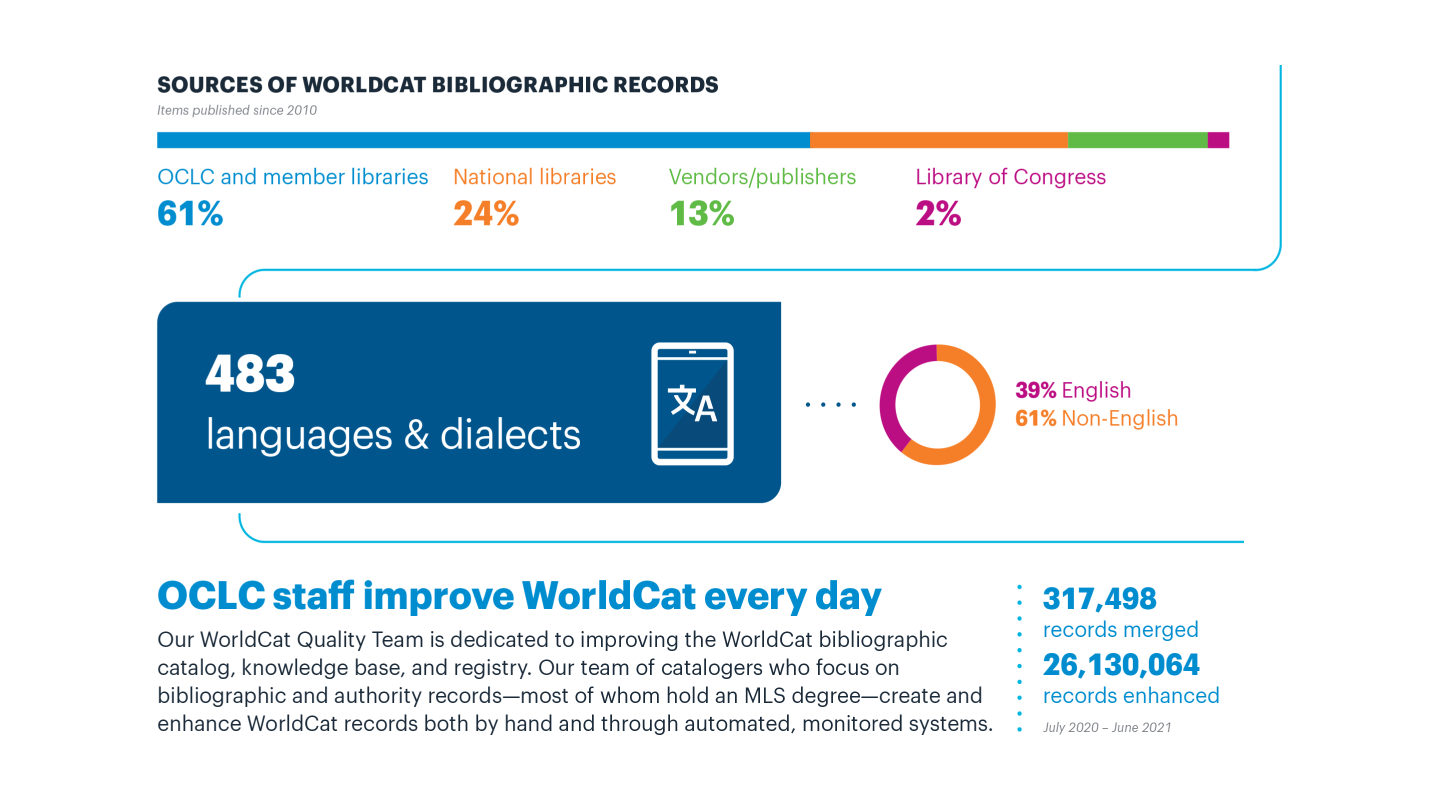
We transitioned the platform to a fully responsive architecture, ensuring students and researchers could access 540 million+ records with equal precision on a smartphone or a desktop.
Connected Data (Linked Data):
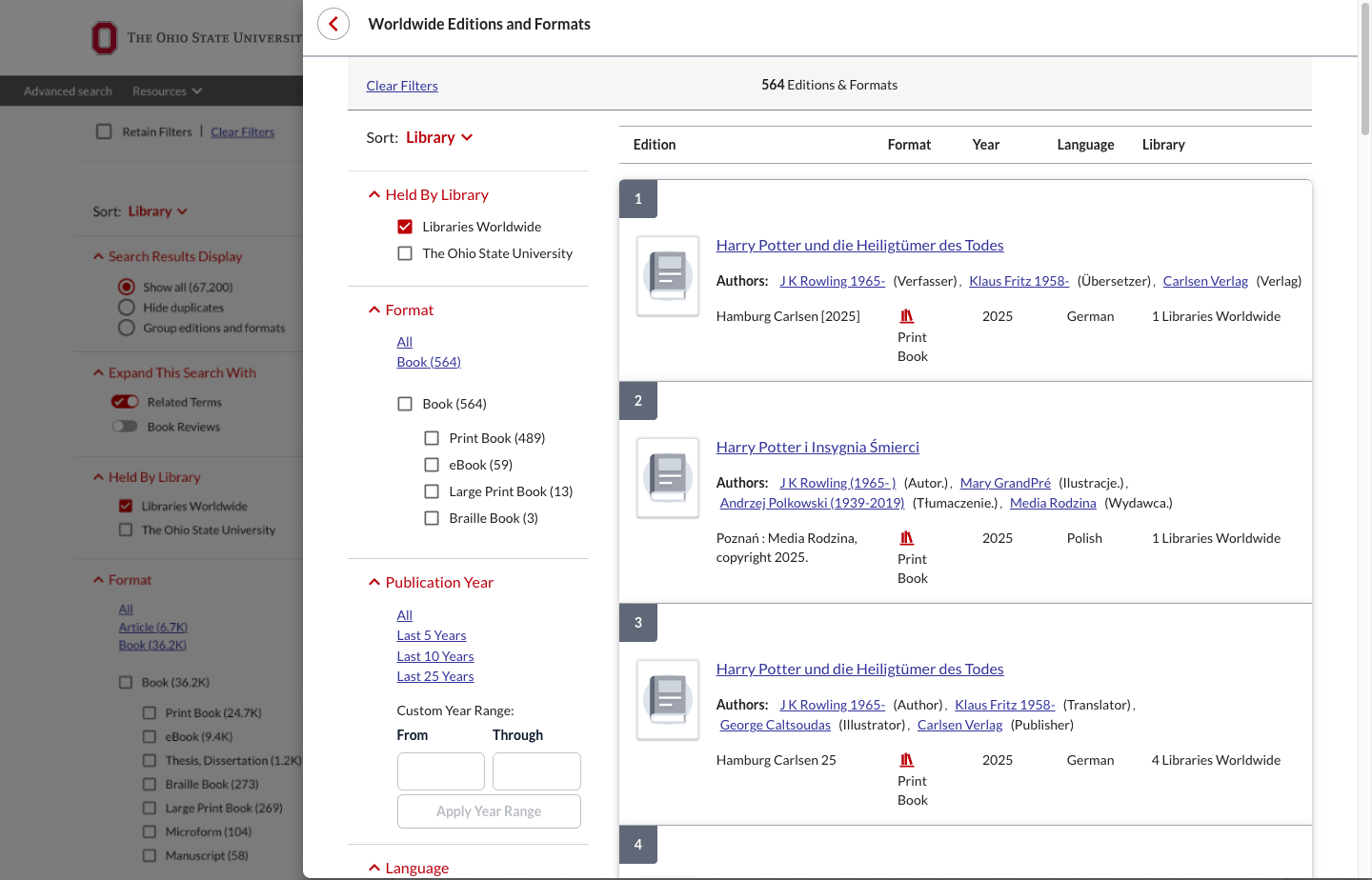
We moved beyond static records to leverage linked data entities, providing users with richer context by connecting authors, subjects, and related works through a visual web of information.





OBJECTIVE:
Global Search, Local Precision
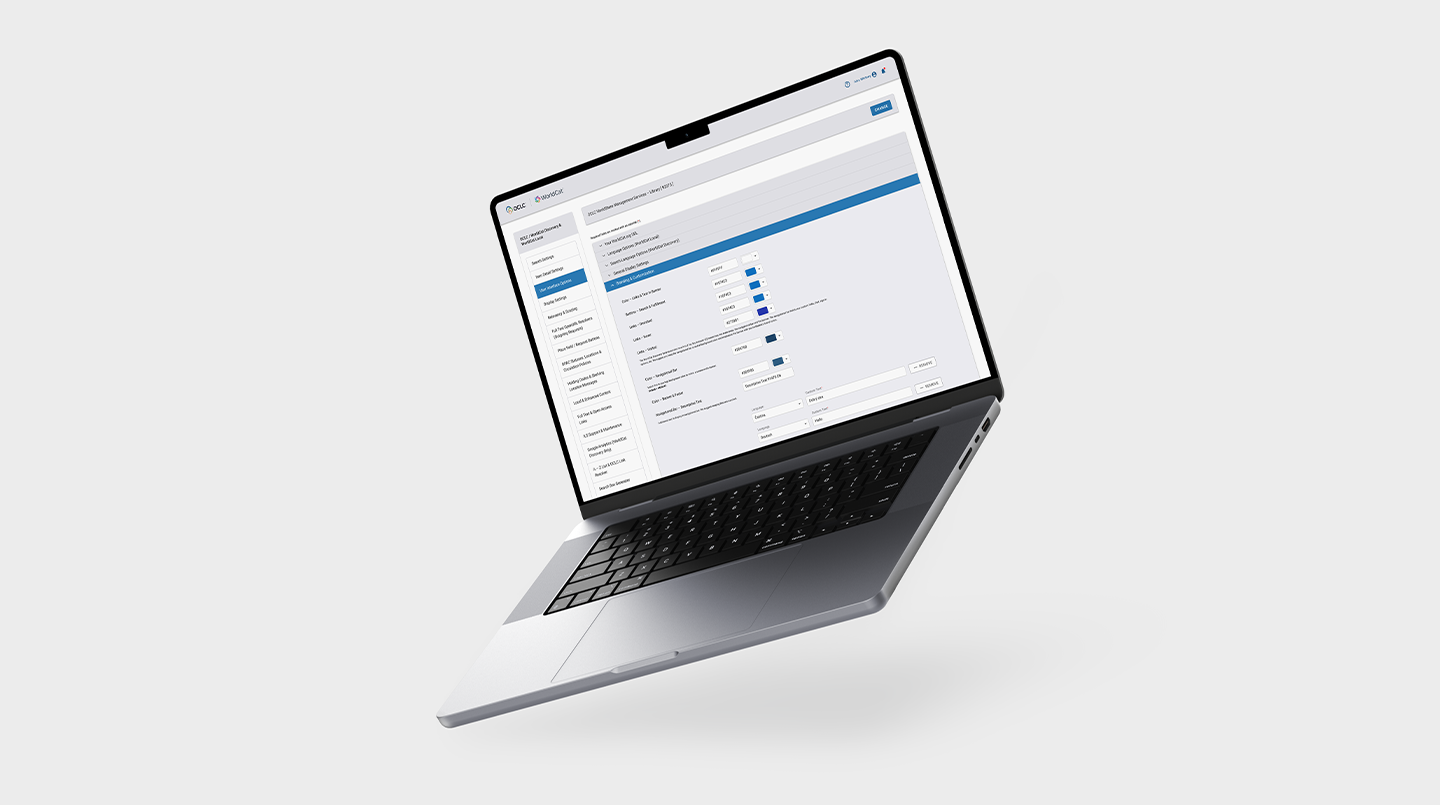
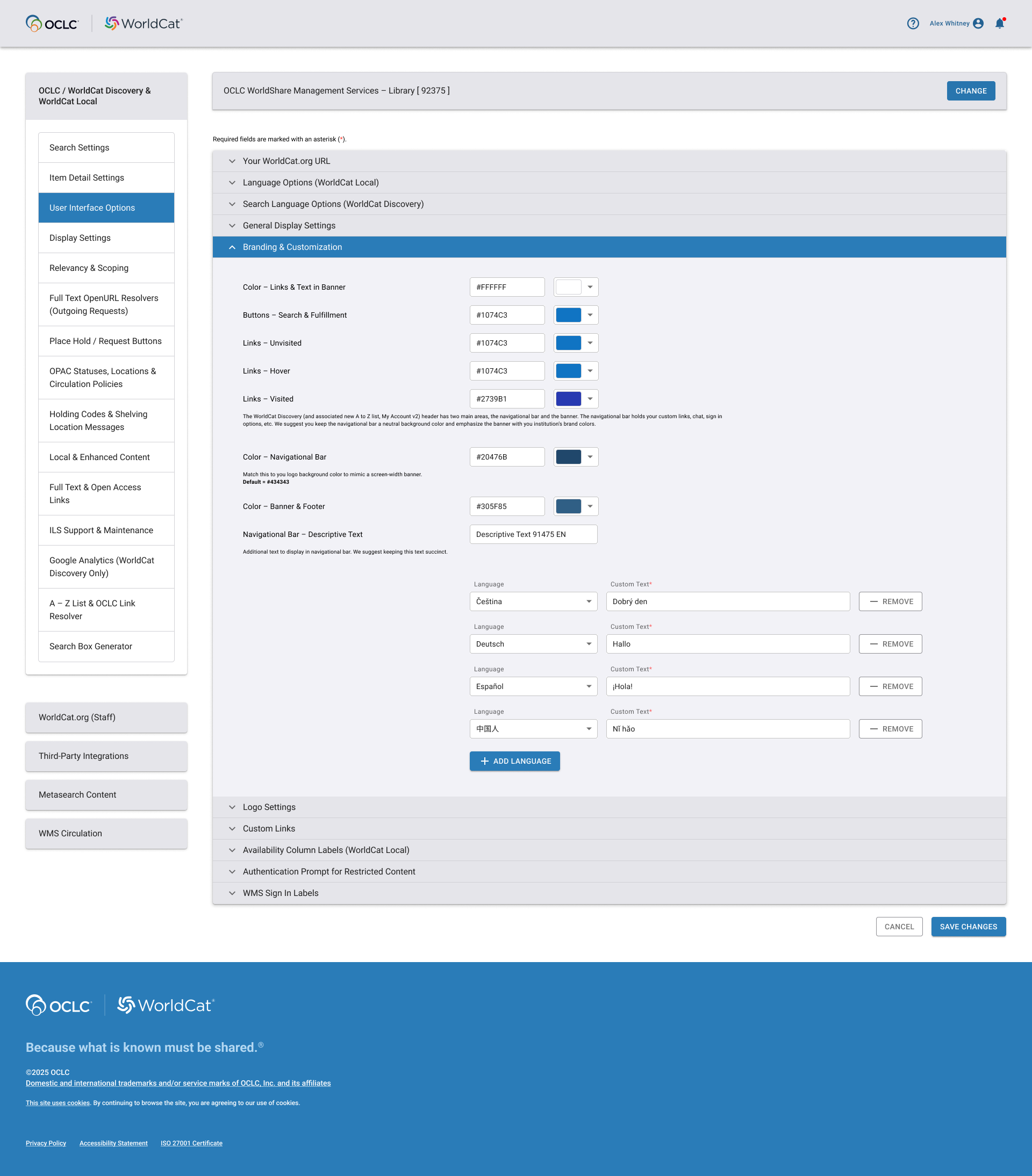
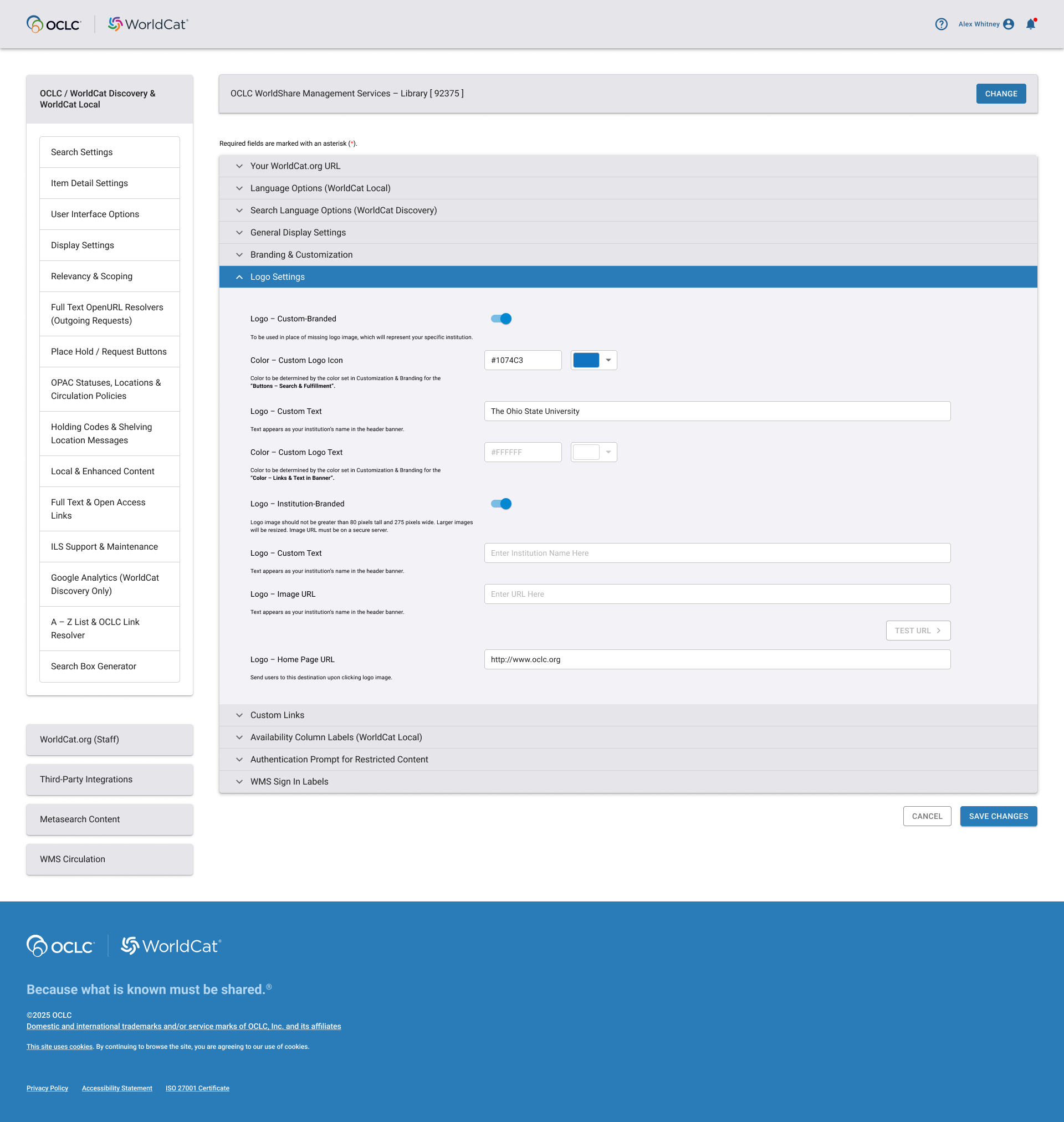
The mandate was to balance high-level technical advances with rigorous user testing to create a "Ready-Out-of-the-Box" SaaS platform. The goal was to empower libraries to provide a branded, locally relevant experience that connects patrons to the world's knowledge instantly.




PROCESS + WORKFLOW:
From Legacy to Leading-Edge
Managing a two-year transformation required a high-velocity, integrated design approach:
The Design System Feedback Loop:
As a contributor to the Cardigan Design System, I used WorldCat’s real-world "stress tests" (like multi-language character sets and complex filtering facets) to inform the creation of reusable UI components.
Streamlining the "Results Tile":
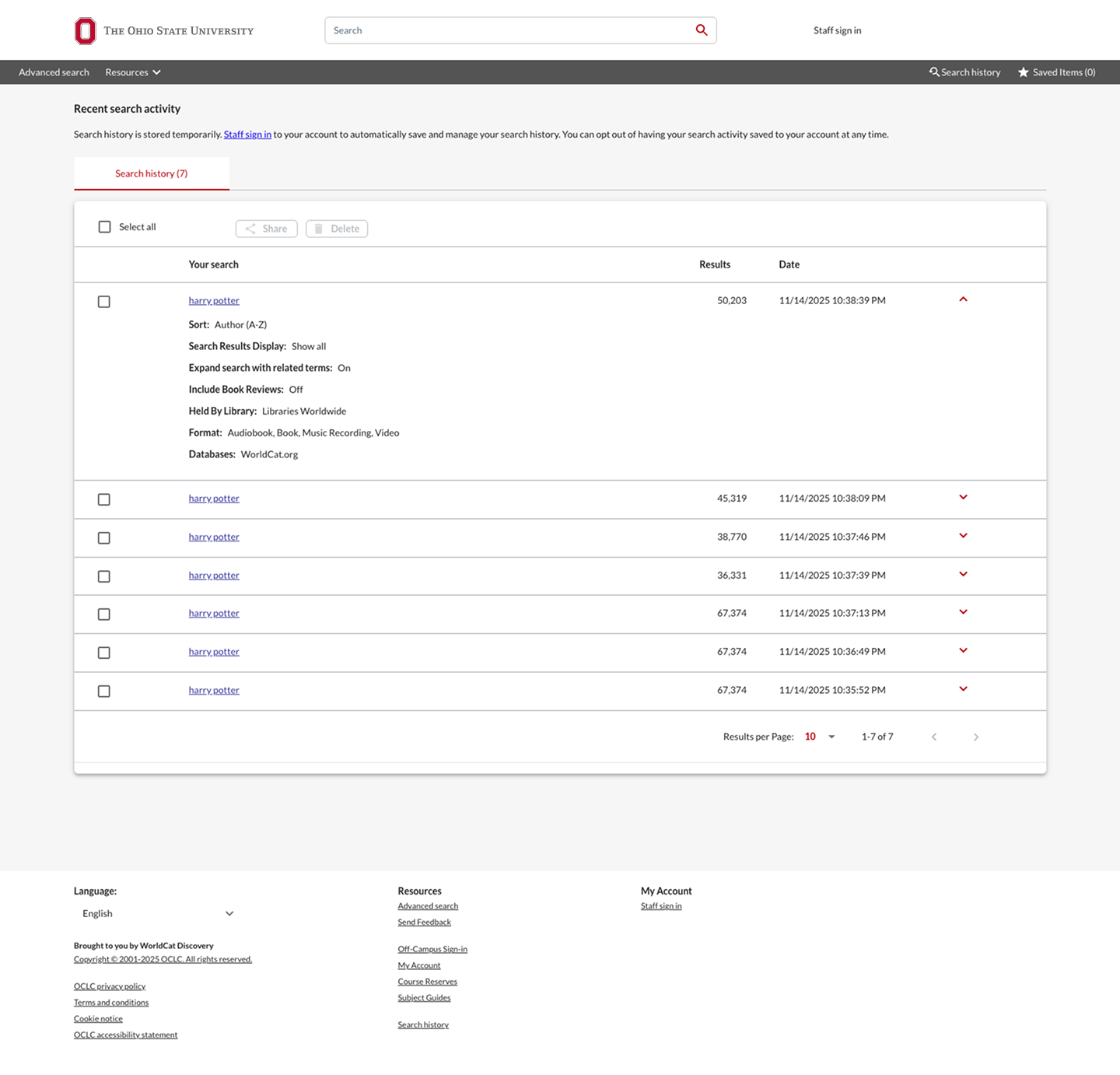
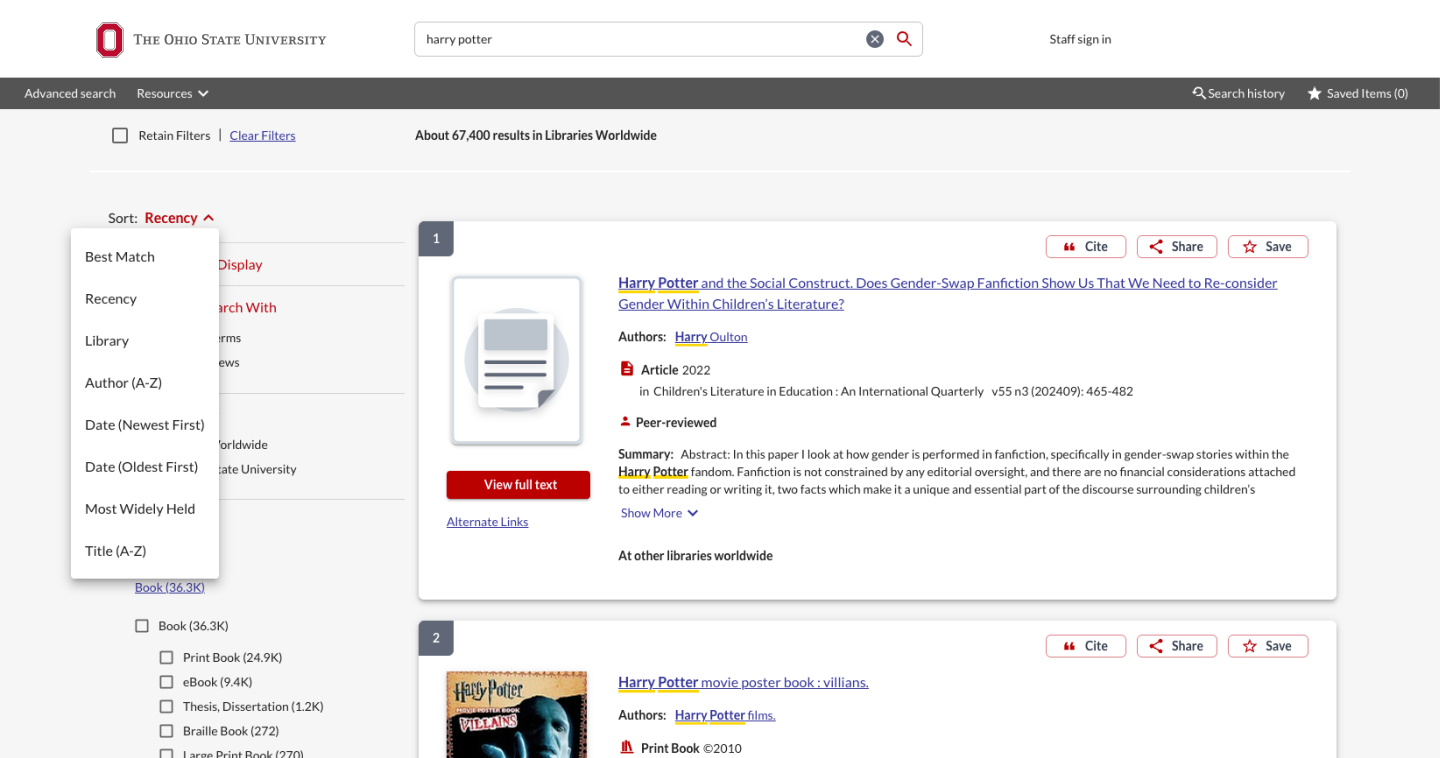
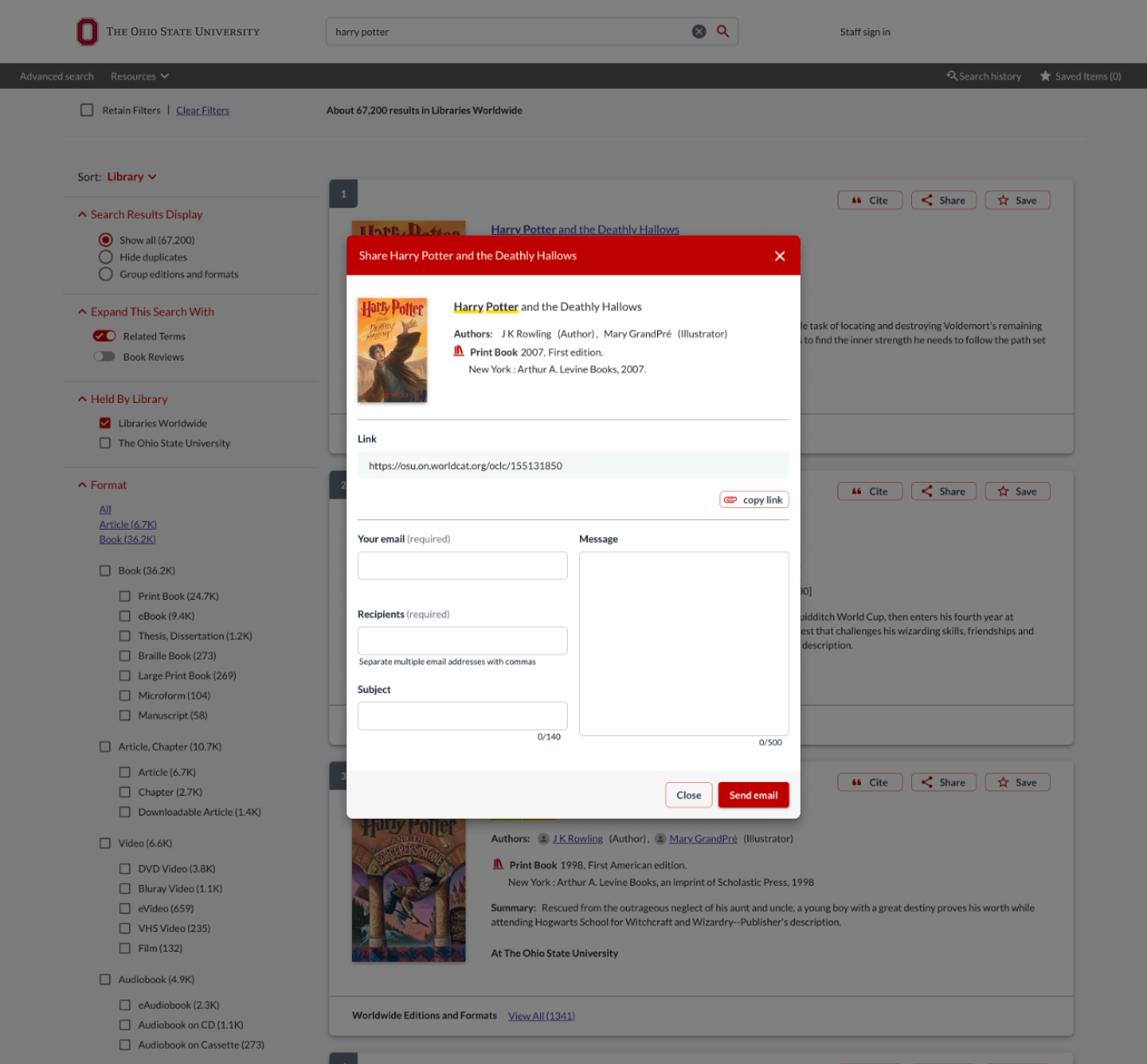
We redesigned the search results layout to maximize information density while preserving whitespace, utilizing material format icons and highlighting search terms to show "why" a result was returned.
Advanced Search Evolution:
I led the modernization of the Advanced Search experience, transforming a daunting Boolean-logic form into a clean, intuitive query-builder that remains flexible for power users.
Accessibility (WCAG) as a Baseline:
We integrated accessibility from the wireframe stage, ensuring tabbing, screen reader compatibility, and color contrast were baked into the "off-the-shelf" product for all global customers.

RESULTS:
A New Standard in Discovery
The modernized WorldCat Discovery provides the world’s libraries with an unparalleled competitive edge:
Responsive Dominance:
The platform now offers a seamless experience across all device types, capturing the shift toward mobile-first research behavior in the academic sector.
Operational Agility:
By utilizing the Cardigan Design System, we significantly reduced technical debt and maintenance difficulty, allowing OCLC to deploy new features and third-party integrations with unprecedented speed.
Improved Fulfillment Efficiency:
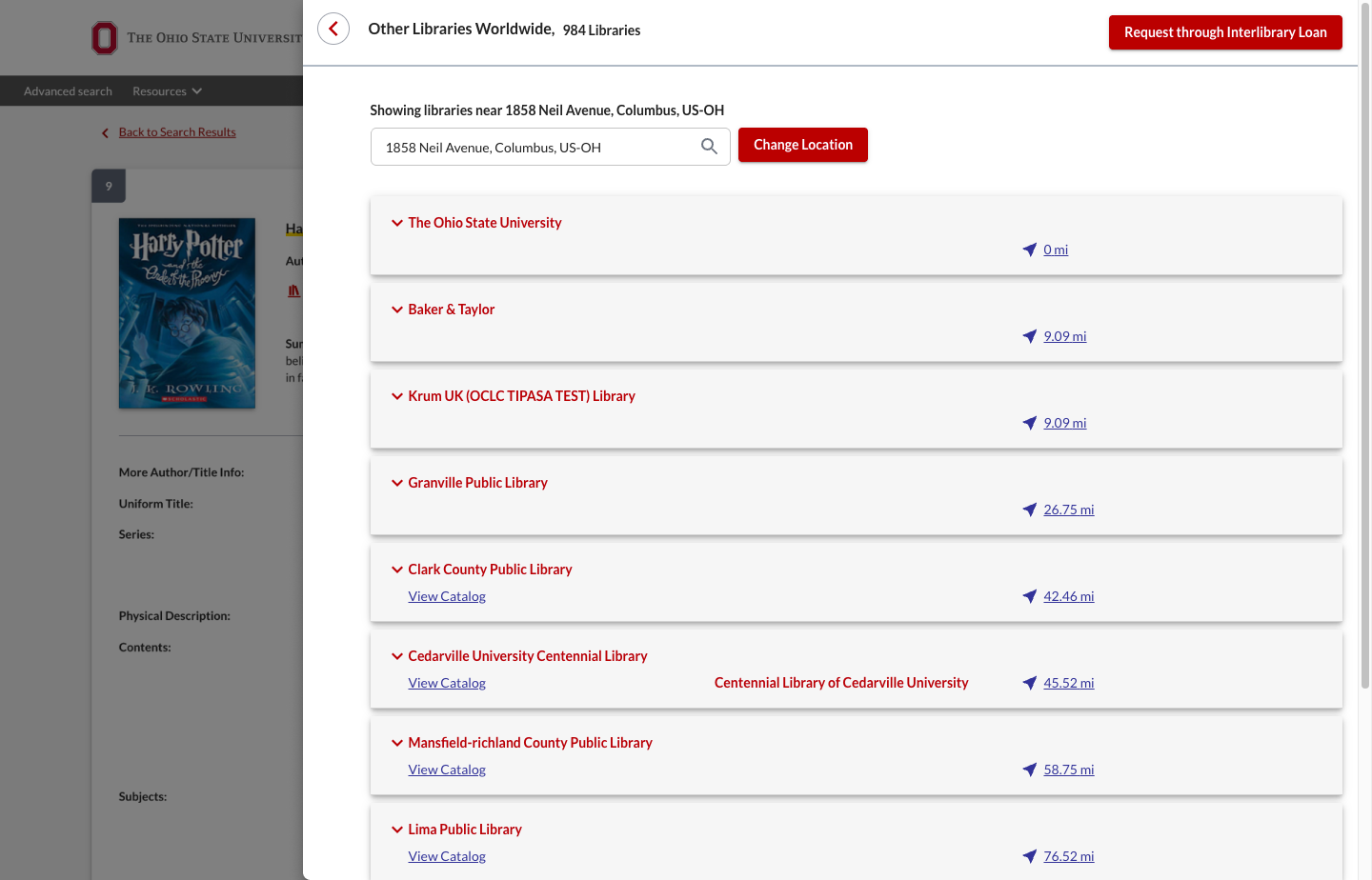
The tighter integration with WorldShare Management Services (WMS) made "the last mile" (checking availability and placing holds) 100% more intuitive, reducing user frustration.
Search Relevance at Scale:
Updates to the proprietary ranking algorithms, combined with a cleaner UI, have empowered researchers to navigate 540 million records with the same ease as a standard web search.
Global Library Impact:
Since 1971, WorldCat has been the steward of knowledge; this redesign ensures that the world's largest bibliographic database remains the champion of discovery for the next generation of learners.